Contact Person: Mr.Li
Mobile: +86-13186019379
Wechat: 18509252400
Email: info@mudsolidscontrol.com
Address: No.2 Hu·ochang Rood, Yangling District, Xianyang City, Shaanxi Province, China
In oil and gas drilling operations, the shale shaker serves as the first line of defense in the solids control system, directly impacting drilling efficiency, mud quality, and operational costs. Linear shale shakers and Translational elliptical shale shakers are two commonly used types, with significant differences in working principles and performance advantages. So, what are the core differences between them when selecting equipment? How to choose the right one for different operating conditions? Below is detailed analysis and comparison to guide equipment selection in drilling projects.
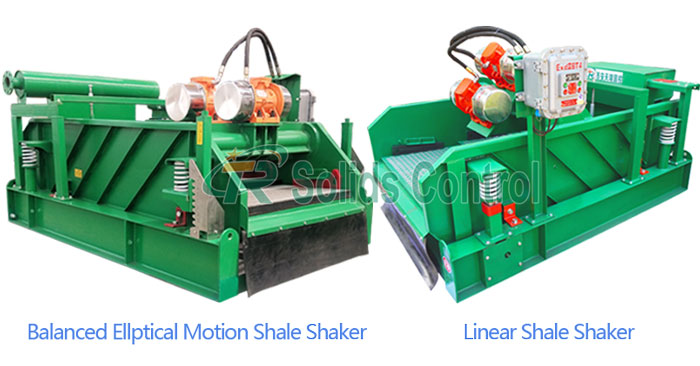
The primary function of shale shaker is to separate solid particles (such as drill cuttings and sand) from drilling fluid through specific vibration trajectories. The fundamental difference between the two types lies in their vibration principles and trajectories.
The linear shale shaker generates exciting force via two synchronously counter-rotating vibration motors, producing linear direction of force that drives the screen box to perform reciprocating linear motion. Materials are thrown forward along straight path on the screen surface: fine particles pass through shaker screen mesh with drilling fluid, while coarse particles are quickly discharged along the linear trajectory, achieving layered classification.
● Vibration trajectory: Straight line (parallel to the screen surface)
● Key feature: Stable screening efficiency
● Adjustability: Amplitude and vibration frequency can be modified by adjusting motor parameters, ensuring optimal matching between material movement speed and screening efficiency.
The translational elliptical shale shaker also uses dual-motor drive, but by adjusting the phase angle and mounting angle of eccentric blocks, it generates compound vibration trajectory on the screen surface (with adjustable major and minor axes of the ellipse). This trajectory combines the screening advantages of linear shaker and the conveying advantages of elliptical vibration: drilling fluid not only moves forward along the screen surface but also undergoes vertical throwing motion perpendicular to the screen.
● Core advantage: Effectively prevents screen clogging, especially suitable for high-viscosity, high-silt-content drilling fluid
● Performance highlight: Higher conveying efficiency, adaptable to large throughput requirements
| Parameters | Linear Shale Shaker | Balanced Ellptical Shale Shaker |
| Vibration Trajectory | Linear motion | Translational elliptical motion |
| Amplitude Range | 2-8mm, narrow adjustment range | 3-12mm, independent adjustment of major and minor axes |
| Screening Efficiency | High (stable separation precision for medium-fine particles) | Higher (composite vibration balances precision and conveying efficiency) |
| Anti-Clogging Performance | Moderate (prone to screen adhesion with viscous materials) | Excellent (vertical throwing motion effectively cleans the screen, reducing clogging) |
| Suitable Drilling Fluid Types | Low-viscosity, low-silt-content drilling fluids (e.g., freshwater drilling fluid, conventional polymer drilling fluid) | High-viscosity, high-silt-content drilling fluids (e.g., deep well drilling fluid, directional drilling fluid, oil-based drilling fluid) |
| Energy Consumption | Low (dual-motor synchronous drive, minimal energy loss) | Moderate (phase angle adjustment for elliptical vibration, slightly higher than linear type) |
Equipment Wear | Relatively low (uniform force distribution in linear vibration, slower wear of screen mesh and vibrator) | Moderate (composite force in elliptical vibration, slightly higher wear of screen mesh and bearings than linear type) |
| Maintenance Cost | Low (simple structure, few wear parts, long maintenance intervals) | Moderate (regular phase angle adjustment required, slightly higher frequency of wear part replacement) |
Applications of Linear Shale Shaker
Linear shale shakers are more suitable for the classification and screening of large-scale, coarse-grained materials due to their faster material conveying speed and lower energy consumption.
Shallow wells & vertical wells: Suitable for low-displacement, low-viscosity, low-silt-content drilling fluid. Its high screening efficiency meets solids control needs, while low energy consumption and maintenance costs reduce overall project expenses.
Conventional exploration drilling: Requires high drilling fluid purification precision and handles uniformly sized particles. Stable screening performance ensures consistent drilling fluid quality, avoiding delays caused by excessive solid particles.
Budget-constrained projects: Simple structure and low failure rate minimize downtime for maintenance, ideal for projects with limited maintenance resources.
Applications of Translational Elliptical Shale Shaker
Translational Elliptical Shale Shaker is more suitable for the classification of fine-grained and difficult-to-screen materials due to its high screening accuracy and strong anti-clogging ability.
Deep wells & ultra-deep wells: Adapts to high-circulation-depth, high-viscosity, high-silt-content drilling fluid and irregular drill cuttings. Strong anti-clogging capability and large throughput prevent screen blockage, ensuring smooth drilling fluid circulation.
Directional drilling & horizontal drilling: Drill cuttings are prone to settlement and wellbore blockage. The screen’s high-efficiency conveying quickly removes cuttings, while composite vibration enhances screening efficiency and ensures wellbore safety.
Oil-based drilling fluid & high-density drilling fluid: Effectively cleans the screen through vertical throwing motion (preventing clogging from sticky solid particles), maintains screening precision, and extends drilling fluid service life.
In addition to matching performance with operating conditions, the following factors should be considered when selecting a drilling shale shaker:
Prioritize Operational Needs, Balance Efficiency & Cost
First, determine the vibration type (linear/elliptical) based on core operational parameters: drilling fluid viscosity, silt content, displacement, drilling depth, and well type.
Balance equipment purchase cost, maintenance cost, and operational efficiency with project budget and maintenance resources to avoid "over-selection" or "under-selection."
Critical Selection Considerations
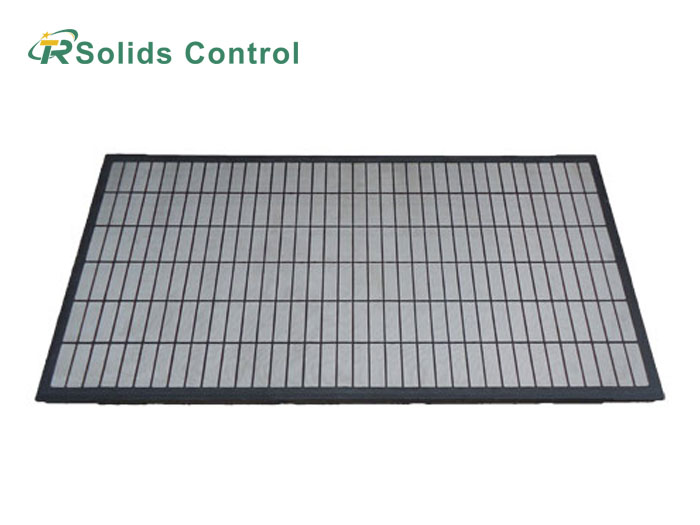
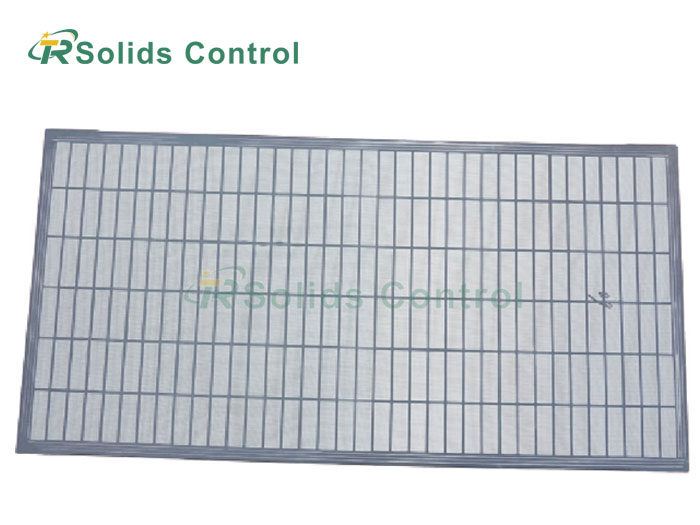
Shaker Screen compatibility: Choose shaker screen matching the solid particle size of the drilling fluid to avoid compromised screening efficiency. Prioritize wear-resistant, anti-clogging materials (e.g., stainless steel, polyurethane) for extended service life.
Equipment stability: Select models with excellent shock absorption and high frame rigidity to prevent screen body shaking (which affects screening results) and reduce impact on the drilling rig. Opt for reputable manufacturers with comprehensive after-sales service for reliable maintenance support.
Adjustability: For projects requiring switching between multiple drilling conditions, choose translational elliptical shale shakers with adjustable ellipse axes. Vibration parameters can be modified to adapt to different scenarios, improving equipment versatility.
Linear and translational elliptical shale shakers are not competing but complementary, each optimized for specific operating conditions.
Linear motion shale shaker: Core advantages of "high efficiency, energy saving, and large capacity" make it suitable for rough screening, shallow wells, and low-viscosity drilling fluid.
Translational elliptical shale shaker: Core advantages of "high precision, anti-clogging, and adaptability to complex conditions" make it ideal for fine screening, deep wells, directional wells, and high-viscosity drilling fluid.
In practical drilling operations, matching equipment performance to specific operational needs while balancing efficiency and cost is key to achieving optimal solids control, ensuring safe and efficient drilling.
If you need to know the parameters and pricing of specific models, you can contact TR Solid Control shale shaker manufacturers at any time to obtain customized selection solutions.

Address: No.2 Hu·ochang Rood, Yangling District, Xianyang City, Shaanxi Province, China
Tel: +86-13186019379
Wechat: 18509252400
Email: info@mudsolidscontrol.com
Contact: Mr.Li
 +86-13186019379